Saturday, 2 November 2013

AUTUMNAL ART: GREAT CANADIAN PAINTINGS FROM THE FALL SEASON

AUTUMNAL ART: GREAT CANADIAN PAINTINGS FROM THE FALL SEASON

The autumn time has featured prevalently in the work from important periods during the careers of Canada’s influential artists of the 20th century. For the Group of Seven, a recurrent fall trip to the Algoma region in Ontario stands out. These trips were taken at a time when the Group of Seven members were strongly unified in their goals to create a distinct nationalistic style of landscape art. They were heavily under the influence and stylistic guidance of their recently deceased dear friend and fellow artist Tom Thomson. Armed with memories of their friend, the artists felt a strong sense of artistic purpose; therefore the work from their Algoma sketching trips can be considered quite artistically and emotionally charged. Thomson’s ability to convey the vivid colours and aura of the autumn had been exceptional. To this day, Thomson’s sketches of fall colours and foliage remain some of his most cherished and prized to collectors and museums.

In the autumn of 1918 Group of Seven members J.E.H. MacDonald, Lawren Harris and Frank Johnston, made the first of their renowned boxcar trips to Algoma with patron Dr. MacCallum. Lawren Harris was able to convince the Algoma Central Railway to lend them a boxcar, which was sidelined from the tracks at convenient sketching locations. The boxcar was used as lodgings and studio and was complete with bunks, tables and chairs, a stove, and painting materials. There was also a canoe and a handcar for short distance travel. The boxcar was bright red and numbered 10557 on the side in big black lettering. Over the doorway were mounted sprays of evergreen and the motto: Ars Longa Vita Brevis (meaning Art is Long, Life is Brief).

This first “boxcar” trip in September of that year began at the Agawa River Canyon. It was the first sketching stop on the route, and they stayed there to paint the autumnal scenery for many days. MacDonald in particular was captivated by the Algoma landscape. A.Y. Jackson later remarked, “I always think of Algoma as MacDonald’s country. He was awed by the landscape and he got the feel of it in his paintings.”

Also for Frank Johnston, during this stage of his career he is an enthusiastic participant in the endeavors of the forming Group of Seven. Johnston returned again in 1919 for the next boxcar sketching trip. In 1919 he showed sixty works in an Algoma Show, and in the first Group of Seven show he had more works entered than any of the other artists. Although Johnston did not remain officially connected with the Group of Seven after 1922, when he embarked on his own artistic pathway he still excelled at conveying the aura and atmosphere of the autumn in his paintings.

Harris’ work at Algoma is also quite distinct. In particular the stylized way within which Harris depicts the multi-coloured trees of the changing season is unique. He would continue to depict trees in this manner into the early stages of his Lake Superior period, before moving even further into stylization of the landscape.

Franklin Carmichael is another Group of Seven member whose talent thrived when he joined in on the second boxcar trip. Into the early 1920s some of Carmichael’s most refreshing and innovative works were autumn scenes, such as October Gold, 1922 and Autumn in Orillia, 1924.

By: Jill Turner

Photo Credits:

1. Tom Thomson. Autumn Tapestry. oil on panel. Sold at Masters Gallery, 2013.

2. Tom Thomson. The Pool.. oil on canvas. National Gallery of Canada.

3. JEH MacDonald. On Mitchell's Lake, Algoma, 1918 oil on panel. Private Collection, Masters Gallery, Ottawa, ON.

4. Frank Johnston. Spruce Sentinels, Algoma, Ont. 1918. Tempera on paper. 21.75 x 16

5. Frank Johnston. Agawa Canyon, Algoma, 1918 oil on panel. Sold at Masters Gallery, 2013

6. Lawren Harris. Lake Superior Sketch XC, circa 1921. oil on panel. 10.75 x 14 in. Sold Masters Gallery, 2013

7. Franklin Carmichael. Autumn scene from Masters Gallery past highlights archive.

8. Franklin Carmichael. October Gold, 1922 oil on canvas. The McMichael Collection of Canadian Art, Kleinberg, ON.

9. Franklin Carmichael. Autumn in Orillia, 1924 oil on canvas. The Beaverbrook Gallery, Fredericton, NB

Thursday, 17 October 2013

ART AND NATURE: A PAST AND PRESENT LOOK (FEATURING JACK COWIN)

ART AND NATURE: A PAST AND PRESENT LOOK (FEATURING JACK COWIN)

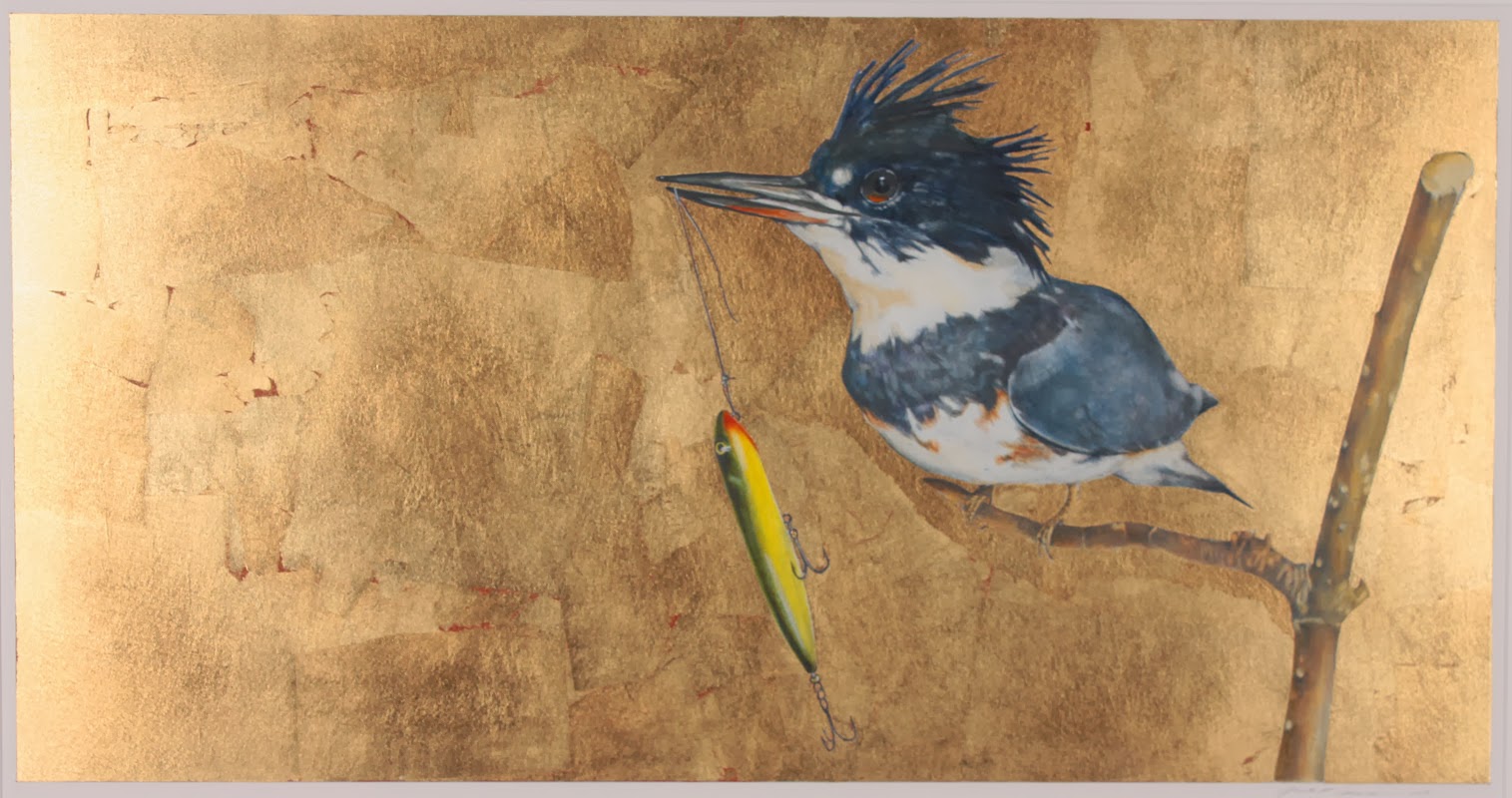
Jack Cowin is both a talented artist and a knowledgeable naturalist. This makes him an ideal interpreter of the natural world. Cowin’s unique hand-coloured etchings adorned with gold leaf are creative and innovative, and we at Masters Gallery have come to associate this distinct high quality work with Cowin. His ability to meticulously record the flora and fauna he observes around him always with an additional touch of elegance is good reason why his work has been featured in countless collections across North America.

JACK COWIN'S WORK IN SELECTED PUBLIC COLLECTIONS AND EXHIBITIONS

In all of its guises, Art has evolved organically over the centuries. New ideas and old ones have often comingled harmoniously with the end result being something truly unique. Cowin’s work is just so; presenting fresh depictions of the creatures in the natural world with hints reminiscent of the very best that natural history in art has offered in Western tradition. Some historical citations that can be found in Jack Cowin’s work might include medieval bestiaries, and the ultra-refined natural history illustrations of the 18th and 19th centuries. Cowin has inherited and kept vibrantly alive the wonderful tradition of merging nature and art, that has had a presence in the history of art over the many centuries.

Although not related to Canadian art in particular but to Cowin’s subject matter, I thought it might be interesting to present a few historically interesting cases featuring the co-existence of nature and art in the past. The first and chronologically earliest that I think interesting is the medieval bestiary. The term ‘bestiary’ derives from the opening lines ‘Bestiarum Vocabulum’ of its predecessor, the ancient Greek compilation of animal lore called the Physiologus. Quite literally it was a book about many beasts, as were bestiaries. Bestiaries were illustrated books filled with current knowledge about numerous animals, both commonplace (like the swallow or badger) and mythological (like the mermaid or unicorn). Prevailing religious attitudes during the Middle Ages seeped into all areas of life; therefore even bestiaries were infiltrated with Christian morals. They were available as richly illustrated examples for the wealthy, or as cruder variants for laymen. The height of popularity for medieval bestiaries was in the 12th and 13th centuries, particularly in France and England. One of the most complete and illustrious examples was executed in England circa 1200, called The Aberdeen Bestiary, where it is now housed at the University of Aberdeen.

Although the animals, birds and aquatic life by Jack Cowin are certainly depicted in far more heightened detail than the beasts of the bestiaries; the underlying principle aiming for accuracy was often present and the use of elaborate gilt backgrounds draws a parallel to the background of Cowin’s signature etchings.

As we move ahead to the 18th century, there were changing perceptions of the natural world and how it should be perceived. It was the Age of Enlightenment, and an enormous thirst for knowledge of the natural world was fueled by the discovery of the New World and through advancements in natural science. Such converging factors, amongst others, led to an explosive interest in depicting flora and fauna with as much authenticity as was achievable. Accurate visual aid was more efficient than lengthy descriptions of new and varying species of beasts around the world. The body of naturalists whom were extraordinarily talented artists at recording nature is large; therefore I have selected just a few artists work to exhibit the exceptional drawings of the 17th and 18th century naturalist artists. In these artists work I see the same precision that Jack Cowin presents in his works of all mediums. Of particular interest to me was the work of Maria Sibylla Merian, who made natural studies primarily from her travels to Surinam. Other noteworthy artists were Mark Catesby, American William Bartram and Sarah Stone; all active in the British Colonies in the 18th century.

No discussion of natural history illustration is complete without mention of John James Audubon’s ornithological art. I will not delve into his biography, as it is readily available. Active during the first half of the 19th century, Audubon’s work represents the peak achievement in realistic, yet beautified, natural history illustration. He contributed great progress to the field of ornithology, having himself identified approximately 25 species of birds. His painting ability left most illustration of the same genre for decades after in his debt. The culmination of his career was the illustrated Birds of America, with over 400 hand-coloured engravings of bird species. I am reminded of great 19th century ornithological artists such as Audubon, or his contemporary Edward Lear, when I see the latest watercolours by Jack Cowin.

I hope you have enjoyed my sojourn into the world of natural history illustration, and that you will enjoy all of our recent acquisitions by Jack Cowin.

By: Jill Turner

PHOTO CREDITS

1. Jack Cowin, Raven graphite on paper

2, 3, 4, 5. A Peacock,A Unicorn Slaying, Vultures and A Yale in The Aberdeen Bestiary from the University of Aberdeen online at www.abdn.ac.uk/bestiary

6. From a Monk's sketchbook, Italian, circa 1400 (Partridge, Kingfisher, Blackbird, Pigeon, Duck, Water Rail, and House Sparrow)

7. Jack Cowin, Puffin mixed media and gold leaf

8. Jack Cowin, Sparrow mixed media and gold leaf

9. Jack Cowin, Fishing the Narrows mixed media and gold leaf

10. Maria Sibylla Merian detail in Metamorphosis Insectorum Surinamensium hand-coloured engravings, 1726 edition.

11. Jack Cowin, Bees, mixed media and gold leaf

11. Maria Sibylla Merian, "Mucuna" in Metamorphosis Insectorum Surinamensium, 1726 edition.

12. Mark Catesby, "Little Blue Heron" in The Natural History of Carolina, Florida, and the Bahamas Islands hand-coloured engraving, 1731-1743 edition

13. Mark Catesby, "Tang Fish, Yellow Fish" in The Natural History of Carolina, Florida, and the Bahamas Islands hand-coloured engraving, 1731-1743 edition

14. Mark Catesby, "Ivory-Billed Woodpecker" in The Natural History of Carolina, Florida, and the Bahamas Islands hand-coloured engraving, 1731-1743 edition

15. William Bartram, Warmouth, watercolour and black ink, 1774

16. Sarah Stone, Grey Peacock-Pheasant, watercolour, circa 1785

17. Edward Lear, "Alexandrine Parakeet" in Illustrations of the Family Psittacidae, hand-coloured lithograph, 1832 edition.

18. Edwards Lear, "Snowy Owl" in Birds of Europe by John Gould, 1832-37

19. John James Audubon, "Red Cardinal/ Northern Cardinal" in The Birds of America 1827-1838

20. John James Audubon, "Summer Red Bird"

21. Jack Cowin, Bluebird watercolour, 2013

22. Jack Cowin, Gold Finch watercolour, 2013

Jack Cowin, Robin watercolour, 2013

Friday, 27 September 2013

DOCUMENTATION AND DEPICTION: HISTORICAL INTERPRETATIONS OF THE PACIFIC NORTHWEST

DOCUMENTATION AND DEPICTION: HISTORICAL INTERPRETATIONS OF THE PACIFIC NORTHWEST

Emily Carr is probably the best-known Canadian artist to have depicted Northwest Coast First Nations subject matter. Walter J. Phillips is also well known for his interpretations of the native villages at Alert Bay, Mamalilicoola, and Karlukwees; they both excelled at the depiction of totem poles. However, Carr and Phillips were by no means the only artists to have travelled into the more remote regions of the Pacific Northwest to lend their artistic impressions of the First Nations subject matter they encountered. By the end of the 1920s the popularity of taking sketching trips to the Skeena River Region or the West Coast to document the native villages and their totem poles was at a peak. Artists from all over the country and abroad were arriving to sketch. Joana Simpson Wilson, a proficient watercolourist, arrived at Alert Bay from Scotland in 1919 and observed the customs and designs on the First Nations people of the village. Today, many of her observations are in the National Archives of Canada.

Already by the late 19th century in Europe and North America, there existed the concept of documenting the art, culture and customs of the indigenous peoples of the Pacific Northwest. This was in response to the prevailing perception that indigenous cultures were both threatened and in decline. The consensus amongst anthropologists, government bodies, and interested parties was that raising awareness about First Nations communities through the proliferation of art, literature and photography would lead to cultural tourism to these communities; and thus, ultimately towards official support for the restoration and preservation of First Nations traditions. In Canada, none supported this notion more fervently than the anthropologist, Marius Barbeau.

Marius Barbeau believed that both exposure and tourism were the key paths to the preservation of First Nations art and culture. Barbeau and artist Langdon Kihn teamed up with publicists of the Canadian National Railway to promote cultural tourism in British Columbia. There was eventual further collaboration with Indian Affairs and the government; whereby, a Totem Pole Restoration Programme was established. It focused on restoring the totem poles of well-travelled tourist routes. Curiously, the restored totem poles were often repositioned in order to face tourist paths more directly. Barbeau travelled with Kihn and later with other artists such as A.Y. Jackson, Edwin Holgate, and Anne Savage to the Skeena River region to document the totem poles of First Nations communities. He published detailed reference guides of the totem poles in the region, and assisted the Canadian National Railway making promotional materials. He ultimately was instrumental in organizing the 1927 National Gallery exhibition Canadian West Coast Art: Native and Modern with director Eric Brown. The continual use of Northwest Coast imagery in Canadian western art is now historically interesting in it’s own right.

Although the late 1920s was a peak time for artists travelling to sketch the Pacific Northwest, it is worth noting that artists were exploring and rendering the indigenous inhabitants of British Columbia as far back as the late 18th century through the opening years of the 20th century. Professional and amateur photographs from the late 19th to early 20th century have been paramount in preserving Northwest Coast First Nations art and culture. The Victoria-based photographer Richard Maynard accompanied ethnologists to the Queen Charlotte Islands in 1884 and documented villages and individual totem poles in his photographs. Edward Dossetter captured village architecture and life in the 1880s as well. Into the early 20th century, advances in technology allowed for silver gelatin printing directly onto postcard paper. These real photograph postcards were collected as a means of remembering vacations, and at Alert Bay where cultural tourism already existed there are many well-known images from 1910-1920 by photographers Emily Ferryman and Reverend Pedersen. The Alert Bay real photograph postcards in this show were all from the 1919 trip of a Boston gentleman, Howard Sprague.

Emily Carr and Historical Views of the Northwest Coast offers a glimpse at the various art forms that have been used to document and aestheticize the art and culture of the Pacific Northwest. The show cover historical photography from Vancouver Island, Alert Bay region and the Skeena region; as well as exhibits works by key artists that are known for their involvement in rendering First Nations art in British Columbia and the wilderness landscape, such as Emily Carr, Frederic Marlett Bell-Smith, W.J. Phillips, Anne Savage, Pegi Nicol McLeod. The perseverance and excellence of these artists have made the subject of the Northwest Coast as iconic as the hills of Old Quebec, the shores of Georgian Bay and the peaks of the Rocky Mountains.

By: Jill Turner

Photo Credits:

1. Emily Carr, Totem Pole 1912, watercolour, 22 x 18 in. On loan online from a private collection for the exhibition Emily Carr and Historical Views of the Northwest Coast

2. Joanna S. Wilson, Alert Bay, watercolour, circa 1919-1923

3. John Webber, Natives outside a Communal House, Nootka, British Columbia, drawing sketch, 1778, from the National Archives of Canada, C-002822

4. John Webber, At Nootka Sound, watercolour, 1778, from the Peabody Museum at Harvard University

5. Book covers of Marius Barbeau's publications

6. Map Showing the Position of Indian Villages in the 1973 facsimile edition of Barbeau's 'Totem Poles of the Gitksan, Upper Skeena River, British Columbia,' in Bulletin No. 61, Anthropological Series no. 12 Canada Dept. of Mines

7. James Blomfield, Cannery Store circa 1900, etching, from the Vancouver City Archives and published in Printmaking in British Columbia 1889-1983. Blomfield was an English illustrator who lived in B.C. for 6 years and documented Native art and design at the turn of the century.

8. and 9. Two historical photographs of Alert Bay from the first quarter of the Twentieth century

10., 11., and 12. Snapshots of the Gallery getting ready for the exhibition and sale Emily Carr and Historical Views of the Northwest Coast

Saturday, 7 September 2013

ALERT BAY: AN ARTISTIC ATMOSPHERE IN THE PACIFIC NORTHWEST

ALERT BAY: AN ARTISTIC ATMOSPHERE IN THE PACIFIC NORTHWEST

Alert Bay will feature prominently in our upcoming exhibition Emily Carr and Historical Views of the Northwest Coast, which starts on September 28th, 2013. In anticipation for the show, this latest blog post is all about Alert Bay and Canadian Art associated with it. Stay tuned for more blog updates once the show commences.

Alert Bay has long been considered a place of prominence for First Nations art and culture in British Columbia. It has been home to some of the most influential Northwest Coast carvers in the late 19th/ and 20th century; including Charlie James, Mungo Martin, Ellen Neel, and Henry Hunt. Thus, a considerable amount of exceptional visual imagery exists, or is associated with, Alert Bay considering the minute size of the village.

Consequently, for over a century the village of Alert Bay has been attracting artists working in the western tradition, as well as photographers, and tourists. Most visitors were keen to document their trips; and this was achieved through photography, souvenirs, and sketches. Although many visiting artists set out with the intention of accurately documenting the artistic features of the village; it has since been noted that there are discrepancies, inaccuracies and liberties taken for the sake of a pleasing composition. Nevertheless, the history of Alert Bay itself and its inclusion in the history of Canadian art are significant.

The village of Alert Bay did not become incorporated until 1946; at a time where it was reliant on the fishing and logging industries for its prosperity. At this time the village first acquired a bus, taxis, a fire truck, and electricity. However, thriving growth and industry in Alert Bay dates back to the last quarter of the 19th century, and its recorded history to as far back as the 18th century. Cormorant Island was not far from where Captain George Vancouver anchored at the mouth of the Namgis River in the late 18th century. At this time, the Namgis First Nation used Cormorant Island as a resting place for their ancestors, and lived there seasonally. In 1846 the Island received its official name after the H.M.S. Cormorant and in 1858 the bay became Alert Bay after the H.M.S. Alert. A growth in settlement on the Island occurred more fervently in the third quarter of the 19th century, particularly in conjunction with the establishment of a saltery by the entrepreneurial explorers Huson and Spencer. Huson and Spencer convinced the Christian missionary Reverend James Hall to re-locate from Fort Rupert to Alert Bay in 1878, where he established a mission house for teaching First Nations children. Settlement in the village continued to progress; in 1881 a store and cannery were established and in 1886 a sawmill. At around this time Christ Church was built. The town developed throughout the 1890s and through the turn of the century. A hospital was built in 1909 and the first basic telegraph was brought to Alert Bay for communication with the surrounding region.

Emily Carr first visited Alert Bay in 1907 and returned again in 1908 and 1909. She at this point had vowed to document the totem poles of British Columbia. In her journals Carr said that in 1907, “the holidays…I spent in Alaska and are important to my work because I conceived the idea of making a collection of paintings of Indian villages and totem poles.” Around this same time, the professional artists and academician Frederic Marlett Bell-Smith also took a trip to Alert Bay. He was known to have taken his own photographs to assist with later producing canvases. More than Carr, Bell-Smith suggested an interest in the landscape at large around Alert Bay, as his depictions incorporate the bay and mountains beyond. Artists continued to flock to Alert Bay, including Joana Simpson Wilson in 1919 and more famously W.J. Phillips in 1927.

In the first quarter of the 20th century Alert Bay was also a destination spot for many tourists. The Boston travel agency Raymond & Whitcomb organized personalized vacations around North America that included a stop at Alert Bay en route to Alaska. One tourist from Boston, Howard Sprague amassed an album of photographs and real photograph postcards to document his extended North American tour, along with his original trip itinerary. With the album are included many images of the totem poles and buildings of Alert Bay in 1919. The real photograph postcards attest to the interest visitors showed in the artistry of Alert Bay’s totem poles.

As briefly mentioned earlier, Charlie James was a master carver from Alert Bay. In his own time, he was innovative and his style was bold and unique. Later his style would become synonymous with traditional Kwakiutl carving. One of the most prominent features of historic Alert Bay is Charlie James’ Thunderbird and Grizzly poles. The poles tell the creation myth of the thunderbird coming to live with the first ancestors and the grizzly bear later becoming protector of the tribe after the thunderbird returned to his home. These poles are impressive works of art in their own right, and have also become the subject of numerous other works of art by artists such as Emily Carr, W.J. Phillips, and photographers.

By: Jill Turner

Photo credits

1. A carved and painted Charlie James Thunderbird and Grizzly totem pole model

2. WJ Phillips, Totems, Alert Bay colour woodblock print, 1936

3. WJ Phillips, Waterfront, Alert Bay, colour woodblock print, 1928

4. Joanna Simpson Wilson, Alert Bay, watercolour, circa 1919-1923

5. and 6. Real photograph postcards (silver gelatin prints) from the 1919 trip album of Raymond & Whitcomb client Howard Sprague of Boston

Friday, 2 August 2013

NOT IDLE ARE THE ARTISTS OF SUMMER IDYLLS

NOT IDLE ARE THE ARTISTS OF SUMMER IDYLLS

This summer Masters Gallery in Calgary has been busy with a great show and sale most fittingly called “Summer Exhibition.” The show has had a wide selection of exceptional works of art including many of summer subject matter. The gallery's website banner page for this exhibition featured the esteemed colour woodblock print Summer Idyll by W.J. Phillips. Summer Idyll perfectly captures the essence of summer, and the peace and pleasure that the season brings. Many people choose to take time off and relax during the fair months of summer. The days are long and the air is warm, and the mood is usually that of general contentment.

For W.J. Phillips and generations of en plein air artists the summer may be relaxing but it is also a time for being very productive outdoors while the good weather permits it. Thus most artists have not been known to sit idle during the summer months, even if they have expertly evoked the idylls of summertime in their work, as W.J. Phillips has done in Summer Idyll. Phillips wrote the following excerpt about working as an artist during the summer:

At midsummer the prevailing, everlasting and monotonous green often sends the artist hurrying to the mountains or the seacoast, chased by swarms of mosquitoes. I spent one memorable night on a tiny remote island on Lake of the Woods. I had neglected to provide myself with cheesecloth or netting, so my head was under a blanket but the noise the pestilent insects made, quarrelling for standing room on the tip of my nose was informal, and rendering sleep impossible. I was up before daylight, and put in this longest sketching day of my experience, beginning with a sketch of the sunrise, and ending when it was too dark to see, with the sunset. There were short intervals for meals. That night we rowed as far away from land as we could, extended ourselves as comfortably as might be along the floor boards of the boat, and incidentally under the seats, letting the boat drift we composed ourselves to sleep, happy in the thought that we had fooled the mosquitoes for once.

Some summer seasons and some districts know not the mosquito. Two of the most delightful summers I have ever known were spent at Lake Muskoka. The greens were as triumphant there as elsewhere, but I refused to let them annoy me. The weather was glorious, the air was soft, the sandy shores inviting, and , best of all, no battalion of mosquitoes rose to the attack when one left the shelter of the cottage, no insectile Amazon pierced one's shrinking epidermis with her horny proboscis. It was impossible to stay indoors. My young family disported itself in the water and along the shore all day long. Here was an exceptional opportunity. I made sketches of the children nude or in bathing suits. They made splendid willing models.

Phillips was by no means the only artist to be thrilled at the prospect of getting outside to sketch prolifically en plein air. In 1889, J.E.H. MacDonald writes to a friend:

I’m still attending the Saturday morning [art] classes [with George Reid], Lewis. And making some progress of course. I can produce a study that has some semblance to the model. But I’m looking forward to greater improvement by outdoor work in the summer. [J.E.H. MacDonald to Lewis, 1889]

Taking advantage of the summer weather has been especially necessary in some of the country’s more formidable climates, such as the Rocky Mountains. From a small town in the British Columbia Rocky Mountains in 1914, A.Y. Jackson wrote about getting ready to depart since the summer weather was waning.

Lucerne B.C. Aug 29th 14. Dear Kids, Just packing up to leave the rocks for their winter rest. […] Great place for the summer here, no hot days to bother one. just pleasant. and cool at nights. Be good.
 Sincerely 
Alex

It is widely known that Tom Thomson sketched outdoors in Algonquin every summer from 1912 onwards until his death in 1917. He never took for granted the forgiving weather offered from the late spring through to the autumn. Here is a letter to J.E.H MacDonald dated July 22, 1915 describing the conditions of that particular month sketching and working.

Mowat, Ontario, July 22, 1915 Things are very quiet around the Park this summer, have so far had only 2 or 3 weeks work and prospects are not very bright as the people are not coming in as they were expected Of course there are a few jobs there are more guides than jobs I have made quite a few sketches this summer but lately have not been doing much and have a notion of starting out on a long hike and will likely wind up somewhere around the French River and go up the shore to Bruce Mines and later on may take in the Harvest Excursion and work at Yours truly 
Tom Thomson

Although brilliant autumn foliage and ethereal snow clad landscapes are mainstays in the history of Canadian art, we must not forget how active artists are and have been during the summertime. The artists' mentioned above are a minute percentage of countless Canadian artists to have brilliantly captured the essence of summertime in their work.

By: Jill Turner